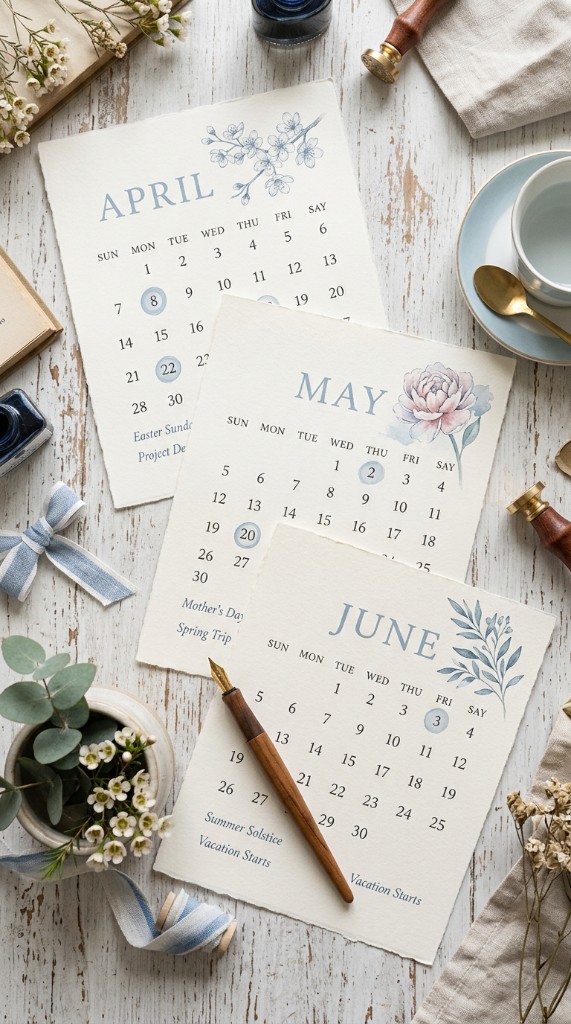
What 3 months of period tracking taught me about my body
Three months doesn't sound like a long time. It's twelve weeks, roughly ninety days, three cycles at most. But in cycle tracking terms, three months is the window where the noise starts to become signal. Where what felt like random experience starts to reveal a shape. Where you stop being surprised by your own body and start recognizing its rhythm.
Most women who track consistently describe the same turning point — somewhere between cycle two and cycle three — where the pattern becomes undeniable. Not just intellectually, in the abstract way of knowing your cycle has phases. But personally: this is my pattern. This is what my body does. And now I understand why. Here is what those three months typically reveal — and what the research says about why tracking produces such a reliable shift in self-knowledge.
What happens in each of the three months
The baseline — everything is new information
The first cycle of tracking is mostly data collection. You're logging what's happening without the context to interpret it yet. You notice your period arrived — when, how heavy, how long. You note how you felt in the days before. You observe your energy levels, your mood, your sleep. Everything is a single data point. Nothing has a pattern yet. But the habit of paying attention is being established — and that attention itself begins to shift your relationship with your body from passive to active.2
The comparison — patterns begin to emerge
The second cycle is where things start to get interesting. You begin to notice repetition. The same low-energy stretch appears before the period. The same lift arrives after it. The same social ease returns mid-cycle. You start asking whether last month's experience was a coincidence or a pattern. You can't be sure yet — but you're beginning to suspect that your cycle is more consistent than you realized. The data points are starting to connect.3
The pattern — it becomes undeniable
By the third cycle, the pattern is visible. You know when to expect the energy dip. You can see the premenstrual emotional shift coming before it arrives. You recognize the post-period lift as a reliable feature of your cycle rather than a lucky week. The experience stops being random and starts being predictable — and predictability, research confirms, is the foundation of self-efficacy. When you can anticipate what's coming, you can prepare, respond, and cope far more effectively.4
The seven things three months of tracking typically reveals
Your actual cycle length — which is probably not 28 days
Large-scale tracking data shows only around 13% of cycles are exactly 28 days. Three months reveals your personal range — whether you run 26, 31, or 34 days — and that variation becomes predictable once you know your own baseline. Research confirms personal cycle data is far more useful than population averages for understanding your body.5
The emotional signature of each phase — as it appears in your life
The textbook description of cycle phases gives you the framework. Three months of tracking shows you your personal version of each phase — what your follicular optimism actually feels like, what your luteal sensitivity specifically targets, how your energy declines and returns. The personal pattern is always more nuanced and more useful than the general one.1
The days that are consistently hardest — so you can protect them
Most women discover that two or three specific days in their cycle are reliably their hardest — the deepest fatigue, the lowest mood, the most intense symptoms. Knowing which days those are means you can stop scheduling demanding things on those days, stop concluding that something has gone wrong, and instead build in rest and support proactively.3
The early warning signs of your period — before it arrives
By month three, most women have identified their personal premenstrual signature — the specific combination of signals (a particular kind of tiredness, a specific emotional shift, a physical sensation) that reliably precedes the period by 2–3 days. This foreknowledge changes the experience of premenstrual symptoms from destabilizing to anticipated and manageable.2
How stress and sleep actually affect your cycle — personally
The general research on stress and cycle disruption is well-established. But three months of tracking shows you specifically: does a bad sleep week reliably push your period back? Does a stressful month reliably worsen your PMS? Your personal correlations — visible in your own data — are the most actionable version of this information you will ever have.4
Your peak week — and how to use it
Tracking makes the follicular-ovulatory peak visible as a resource, not just a pleasant coincidence. Women who track consistently begin to deliberately schedule demanding work, difficult conversations, and important social events for this window — not because of superstition, but because they now have evidence that this is when they function best.6
What normal looks like — for you specifically
Three months establishes your personal baseline — your typical cycle length, your typical symptom pattern, your typical emotional range. With that baseline, anything that genuinely deviates from it becomes visible. Not every variation is cause for concern, but having data on your own normal is the only way to recognize when something meaningfully different is happening.5
A qualitative research study published in PMC interviewing women who tracked their menstrual cycles found they developed complex techniques of self-management including monitoring patterns, adjusting schedules, and interpreting their own health signals in ways that genuinely empowered them. Participants described tracking as a way of understanding how their cycle affects their "selfhood" — not just their reproductive health — across mental, physical, and emotional dimensions.1
Before and after tracking — how the experience shifts
"I don't know why I feel so terrible this week."
"My period came early again — I have no idea why."
"I always feel like a different person before my period."
"Some months are so much worse — I can't predict it."
"I never know when my period is coming."
"I'm on day 25. This is my luteal low — it lasts 3 days."
"I had a stressful fortnight — that's why it shifted."
"I know this version of me. She arrives every month at day 22."
"Last month was stressful. That's why it was harder."
"My cycle runs 27–30 days. I know what to expect."
What makes three months specifically the turning point
One month gives you a data point. Two months give you a comparison. Three months give you a pattern — and patterns are what the brain is built to recognize and respond to. Research confirms that three months of consistent tracking is the minimum window for reliable personal pattern recognition.5 Before that, you're working with too little data to distinguish your individual pattern from normal cycle-to-cycle variation. After three months, your personal rhythm becomes legible — and legibility is the foundation of everything else.
It's also worth noting that what you track matters less than the consistency of tracking it. Women who track even one or two simple daily data points — mood and energy, for example — develop meaningful pattern recognition within three cycles. The goal is not comprehensive data collection. It is the habit of regular attention, sustained long enough for your own pattern to become visible.
The thing tracking gives you that nothing else does
Information about your cycle is available everywhere. Articles, books, research papers, conversations — all of it tells you what cycles do in general. What tracking gives you that nothing else can is the translation of that general knowledge into personal knowledge. It tells you not what cycles do, but what your cycle does. Not when most women ovulate, but when you ovulate. Not how progesterone typically affects mood, but how it affects your mood, in your life, on your specific days.
That personal knowledge — built over three months of paying attention — is one of the most practically useful things you can develop for your own health, wellbeing, and self-understanding. It doesn't require a medical degree or expensive testing. It requires consistency, curiosity, and the willingness to pay attention to a body that has been communicating with you all along.
Your pattern is already there — Feelings helps you see it. Log your period, mood, symptoms, and cravings across three cycles and discover the rhythm your body has been running all along.


References
- Levy, J. & Romo-Avilés, N. (2021). Hormonal health: period tracking apps, wellness, and self-management. PMC. PMC
- RedDrop Inc. (2025). Period tracking 101: understanding your cycle patterns. RedDrop
- Romm, A. (2023). Menstrual cycle tracking: the best "me-search" you can do. Aviva Romm MD
- Symul, L., et al. (2019). Characterizing physiological and symptomatic variation in menstrual cycles using self-tracked mobile health data. PMC. PMC
- Bull, J.R., et al. (2019). Real-world menstrual cycle characteristics. PMC. PMC
- Phase App. (2025). Cycle syncing and productivity. Phase App
- PMC. (2023). Examining menstrual tracking to inform the design of personal informatics tools. PMC